

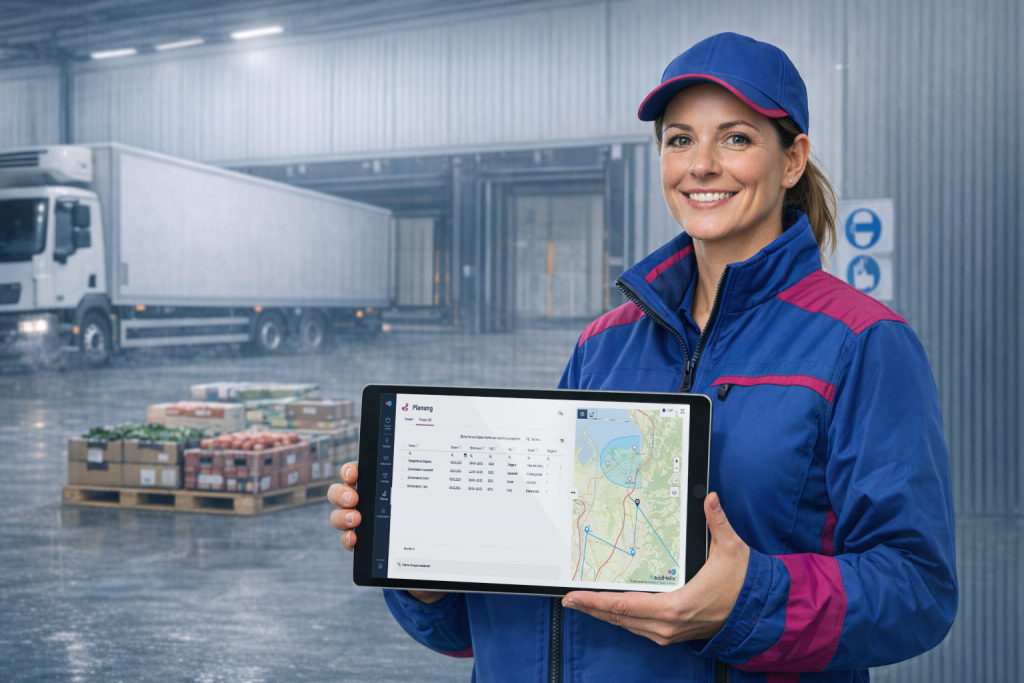
Challenges in food logistics
The biggest challenges in food logistics and how technology solves them
Why smart solutions such as addHelix Road are becoming game changers for SMEs.
Food logistics is one of the most demanding areas of the supply chain. Freshness, hygiene, and efficiency must be guaranteed every second—often under high cost pressure, a shortage of skilled workers, and complex legal requirements. Small and medium-sized enterprises (SMEs) in particular face the challenge of managing all these factors with limited resources. Technology can make a decisive difference here: it creates transparency, reduces the workload on employees, and prevents errors before they happen.
What does this mean for your company?
The new regulation affects not only freeways, but also central provincial and municipal roads. Companies with emission-intensive vehicles must expect significantly higher costs.
Why act now?
With a well-founded cost calculation, you create a solid basis for upcoming contract negotiations and can integrate the new toll costs directly into your planning. This allows you to maintain an overview and strengthen your company's position with business partners.
That's exactly what addHelix Road specialized
A solution that is deliberately kept simple, practical, and efficient.
1. Cold chain under pressure
An unstable cold chain can quickly lead to spoilage, complaints, or even health risks. Every loss is painful, especially for SMEs.
Typical risks:
- Fluctuating temperatures along the tour
- Different cooling zones and product requirements
- Time pressure during loading and unloading
- Complex hygiene requirements
Solution approach:
addHelix Road enables intelligent planning based on cooling requirements, minimizes downtime, and documents the entire cold chain through seamless tracking and real-time data.
2. High cost pressure & inefficient processes
- SMEs often struggle with rising operating costs and tight margins.
- Inefficient routes, empty runs, or a lack of transparency further exacerbate the situation.
Solution approach:
The system automatically optimizes every route—including return loads, vehicle utilization, and seasonal factors. The result: fewer miles, less fuel, and greater efficiency.
3. High planning costs & lack of resources
- Many SMEs still plan their refrigerated transport manually or with inflexible tools.
- This takes time and leads to errors—especially with last-minute changes.
Solution approach:
The approach is based on intuitive operation without complex introduction, can be used immediately via the web without installation, integrates seamlessly into existing systems via APIs, and enables automated planning—even for seasonal or recurring tours.
4. Hygiene requirements & documentation obligations
- Strict rules
- Control of every temperature
- Monitoring of every stop
- Precise timing
Solution approach:
addHelix Road automatically documents every step—from temperature curves and driver times to hygiene parameters. This reduces errors, creates traceability, and protects against liability risks.
5. High service requirements of customers
- Punctual deliveries
- Complete transparency
- Quick responses to changes
Solution approach:
Thanks to real-time tracking and dynamic route adjustment, SMEs are able to respond flexibly and communicate proactively at all times—a service advantage that builds trust.
Why addHelix Road is particularly advantageous for SMEs
Many digital solutions on the market are simply oversized for small and medium-sized logistics companies: too complex, too expensive, or only feasible with considerable implementation effort. addHelix Road was therefore developed in collaboration with industry professionals, specifically for the requirements of SMEs in the food and hygiene trade.
For you, this means:
- Simple operation instead of complex and expensive IT projects
- Ready to use immediately, as it is web-based and requires no installation
- Flexibly adaptable, optimally designed for food and hygiene retail
- Automatic planning algorithms – even without a large planning team
- Clear, understandable visualization for quick, informed decisions
- Sustainable efficiency gains from day one
In short: addHelix Road delivers exactly the features that really help SMEs move forward—without technical baggage or unnecessary costs.
Conclusion: Those who plan digitally today will deliver fresher, safer, and more efficiently tomorrow.
The food industry is changing rapidly, and SMEs that use digital tools have a clear advantage. addHelix Road helps not only to overcome typical challenges such as cold chain management, cost pressure, and time constraints, but also to actively turn them into competitive advantages.
Author: Saltori Karin, Product Marketing